
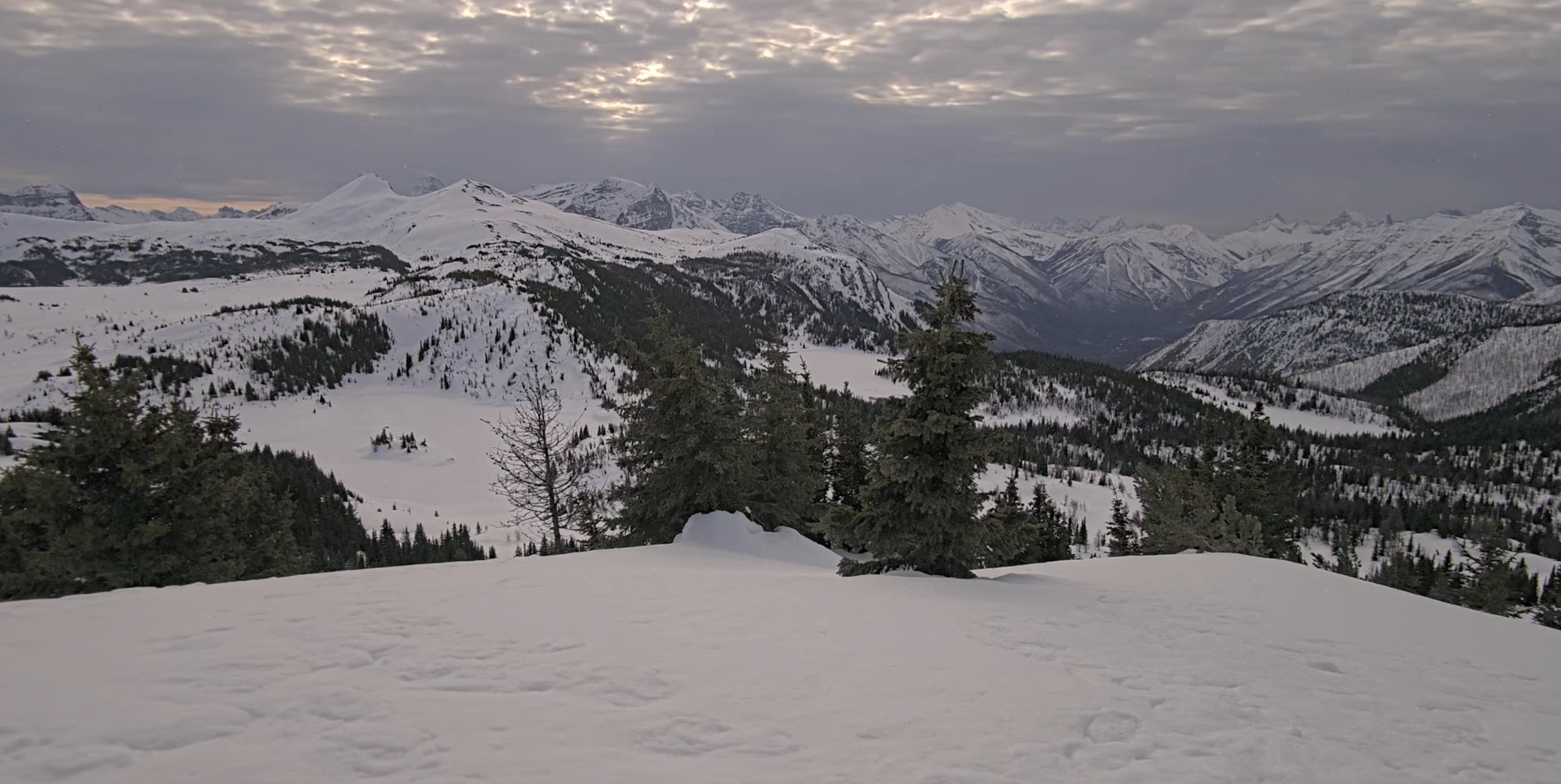
 Rock Isle Lake looking south from the Standish webcam, May 2, 2026
As reported in the Rocky Mountain Outlook, the snowpack at higher elevations in Banff is “truly extraordinary,” And the same is true for Kootenay, Yoho, and much of the Rockies.
Every year, I call up snowfall readings in the Rockies from the Alberta and British Columbia snow pillow sites in hopes of predicting the start of the hiking season. This year record snow in the high country doesn’t look good for early hikes up high. But snow at lower elevations is relatively light, so it might be better to explore valley-bottom trails.
Conditions are similar to July 2022, when record snow buried Sunshine Village. There was so much snow that trails were still closed during the second week of July, and Sunshine reopened for skiing on the July 1st weekend (see Snow buries hiking trails at Sunshine, July 12, 2022).
Global warming myths
The global warming phenomenon was generally accepted a couple of decades ago. As many Canadians believed, ski areas were going to struggle with lack of snow and agriculture in Canada was going to blossom.
Neither belief was reality. As a ski patroller at Lake Louise during the cold old days, we truly struggled with enough snow. When global warming came along, I argued that many western Canadian ski areas, particularly those at higher elevations, were going to benefit. As for the agriculture boom, many folks didn’t realize that a country largely covered with forest was going to see incredible wildfires.
Final prediction
Barring an incredible warming over the next two months, we can expect that hiking on dry trails above timberline will be delayed by at least two or three weeks.
Update May 7, 2026
As in 2022, there is so much snow at Sunshine Village, the resort will reopen from June 20 until July 5 for skiers.
0 Comments